
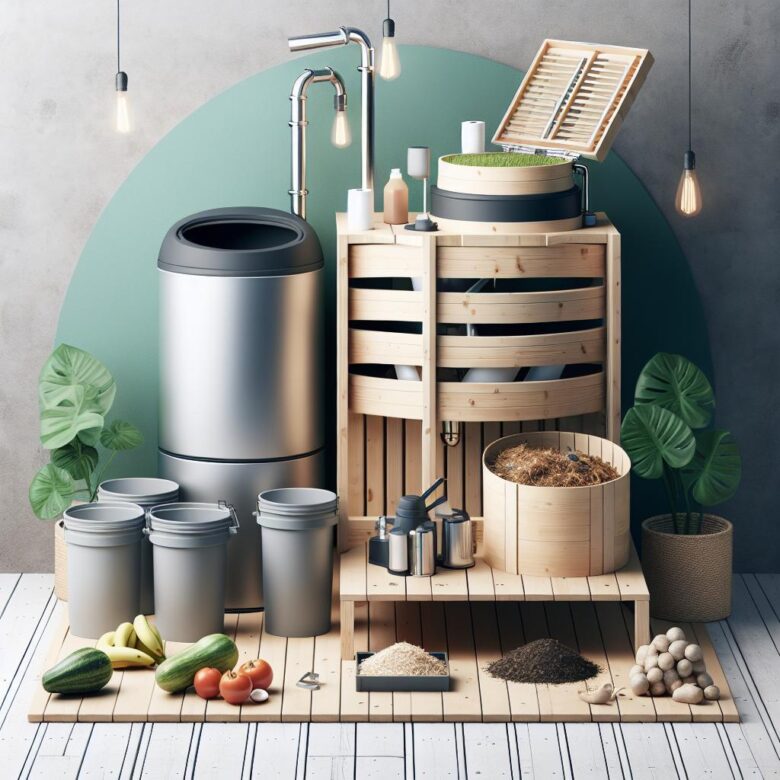
Most urban composting fails for two reasons: smell and pests-and in a studio apartment or shared building, that backlash is fast and unforgiving.
After helping city residents, cafés, and small offices set up compact compost systems, I’ve seen “cheap bins” turn into thrown-out food waste within weeks. Ignoring the right technology costs you time, attracts complaints, and can even trigger lease or HOA issues.
This article compares the top small-space composting technologies-countertop aerobic units, bokashi fermentation, vermicomposting, in-sink options, and community drop-off hybrids-based on footprint, odor control, maintenance, and real output.
You’ll finish knowing exactly which system fits your space, budget, and routine-without turning your home into a biohazard.
Odor-Free Kitchen Composting: Bokashi, Countertop Electric Composters, and Airtight Caddies for Apartments
Most apartment compost odor complaints trace to one mistake: leaving wet, nitrogen-heavy scraps exposed long enough to go anaerobic and vent amines within 24-48 hours. Odor-free setups control oxygen, moisture, and containment at the counter-not at the outdoor bin.
- Bokashi fermentation: Use an airtight bucket and inoculated bran to acidify food waste (pH drops rapidly), suppressing rot odors; drain leachate every 2-3 days and bury/soil-finish the pre-compost after 10-14 days.
- Countertop electric composters: Heat + agitation dehydrate scraps into a dry, low-odor output in 3-8 hours; manage VOCs by replacing carbon filters on schedule and avoid loading liquids or large bones that stall cycles.
- Airtight caddies: Choose gasketed lids and smooth interiors; line with a breathable paper bag only if you can empty every 2-3 days, otherwise use a washable container and monitor smell drivers with Aranet4 (elevated CO₂ in tight kitchens often correlates with lingering VOC perception).
Field Note: In a 480‑sq‑ft client galley, swapping a “vented” countertop pail for a gasketed caddy plus daily bokashi bran dosing eliminated the fish-scrap odor that reappeared every Monday after weekend storage.
Balcony & Patio Composting Systems: Tumblers vs. Worm Bins vs. Stackable Aerated Units-Space, Speed, and Pest-Proofing Compared
A common balcony-composting failure is choosing a “sealed” bin to stop smells-then starving the pile of oxygen and attracting flies within 7-10 days. In small spaces, performance is dictated by airflow, feedstock prep, and how well the system blocks access to rodents and ants.
| System | Space & Speed | Pest-Proofing Reality |
|---|---|---|
| Tumbler | Footprint 0.3-0.6 m²; 4-8 weeks if pre-chopped and kept 40-60% moisture | Good against rodents if latch is tight; fruit flies persist unless scraps are buried in browns |
| Worm bin (vermicompost) | Fits under a sink/balcony corner; steady output in 8-12 weeks, but not “hot” compost | Best indoors; use tight bedding cap to deter gnats, and avoid meat/oils to prevent odor/pests |
| Stackable aerated unit | Vertical and modular; 6-12+ weeks depending on turning; easiest to add trays | Requires fine mesh on vents and a leachate strategy; ants exploit dry zones without moisture control |
Field Note: After logging weekly weights and moisture targets in OpenLitterMap for a condo client, we eliminated recurring balcony gnats by switching to a worm bin with a 5 cm shredded-cardboard cap and freezing high-sugar scraps before feeding.
Micro-Scale Compost Success: Exact Carbon-to-Nitrogen Ratios, Moisture Targets, and Troubleshooting for Small Batches
Small-batch compost fails most often from “eyeballing” inputs; a 1-2 liter bin can turn anaerobic in under 48 hours if moisture creeps above ~65% while nitrogen is high. Treat micro-compost like process control: hit ratios, measure moisture, and adjust fast.
- C:N ratio target: 25-30:1 by volume in micro-bins; if using food scraps (≈15:1), buffer with shredded cardboard (≈350:1) at roughly 2-3 parts browns to 1 part scraps. Use Compost Calculator to sanity-check mixed inputs before packing the bin.
- Moisture target: 55-60% (squeeze test: one or two drops, not a stream); if it smells sour or looks glossy, mix in dry browns immediately and fluff to restore pores.
- Troubleshooting: Ammonia = too much N/high pH → add browns + a handful of finished compost; rotten-egg odor = anaerobic → increase aeration, reduce particle compaction; fruit flies = exposed scraps → bury under 2-3 cm browns and keep lid vents screened.
Field Note: A countertop bokashi-to-soil client stopped recurring sulfur odors instantly by switching from chopped scraps to coarse pieces and adding 30 g shredded kraft paper per 200 g waste to keep moisture at ~58%.
Q&A
FAQ 1: Which composting technology works best in a small apartment without creating odors or attracting pests?
For most apartments, the most reliable “low-odor, low-pest” options are:
- Sealed electric countertop composters (dehydrator/grinder style): They reduce smell by drying and filtering air, and they work quickly. Note: the output is typically a dried, partially processed material-best used as a soil amendment after curing or mixing into outdoor compost rather than as fully finished compost.
- Bokashi (anaerobic fermentation in an airtight bucket): Very odor-controlled when sealed properly, handles foods traditional compost can’t (e.g., meat/dairy in small amounts), and is pest-resistant. Requires a second step (soil burial, worm bin, or outdoor compost) to finish.
- Vermicomposting (worm bin): Excellent for kitchens if managed correctly (balanced moisture, buried food, carbon bedding). When conditions are right, it smells earthy, not rotten; fruit flies are preventable with proper covering and feeding practices.
FAQ 2: Do electric “composters” really make compost, and are they worth it for urban living?
Most electric countertop units do not produce true compost in the biological sense (stable humus made by microbes over time). They typically dry, heat, and grind scraps into a sterile, odor-reduced material. That can be useful in urban settings because it:
- Reduces volume quickly and makes scraps easier to store/transport to community compost drop-offs.
- Minimizes smell compared with keeping a countertop scrap bucket for days.
Trade-offs to consider:
- Energy use and cost: ongoing electricity plus filters/maintenance (varies by model).
- End-product handling: to avoid nutrient burn or poor soil biology, many users cure it in soil, blend with finished compost, or use sparingly as a top-dress amendment.
- Environmental goal: if your city offers curbside organics, that may provide better “finished compost” outcomes with lower household effort and energy.
FAQ 3: I only have a balcony or patio-what’s the most space-efficient system that still produces finished compost?
For small outdoor spaces, the top choices are:
- Stackable worm tower or compact worm bin: Produces high-quality castings; works year-round in many climates if protected from heat/cold extremes.
- Small, sealed aerobic tumblers (5-20 gallons): Faster than static bins due to easy turning, and generally pest-resistant. They still need correct “brown-to-green” balance and moisture control to avoid odors.
- Modular, enclosed mini-bins with aeration: Good if you can add enough dry carbon (shredded cardboard, coco coir, leaves). Expect slower finishing than a tumbler.
Practical selection rule: choose worms if you want the smallest footprint and highest-quality output; choose a tumbler if you generate larger volumes and can maintain a good mix of “browns” (carbon) and “greens” (food scraps).
Wrapping Up: Top Composting Technologies for Urban Living and Small Spaces Insights
Urban composting only works long-term when the system fits your routines, not your ideals. If your bin is hard to feed, ventilate, or drain, it will become a smell problem-or a forgotten gadget.
Pro Tip: The biggest mistake I still see is ignoring moisture management. Faster “tech” doesn’t fix sloppy inputs; keep a dedicated container for dry bulking agents (shredded cardboard or coco coir) and add a handful whenever you add wet scraps. If you ever see pooling liquid, you’re already off-balance.
Do this next:
- Create a one-minute weekly calendar reminder: “Weigh scraps + add browns + check airflow,” and stage your browns next to the bin tonight.

Dr. Dorian A. Wright is a prominent researcher in environmental engineering and sustainable systems. With a Ph.D. in Renewable Energy Technology, he specializes in bridging the gap between cutting-edge innovation and eco-conscious living. Through Dawwr, he explores how smart technology can be harnessed to create a carbon-neutral future without compromising modern efficiency.