
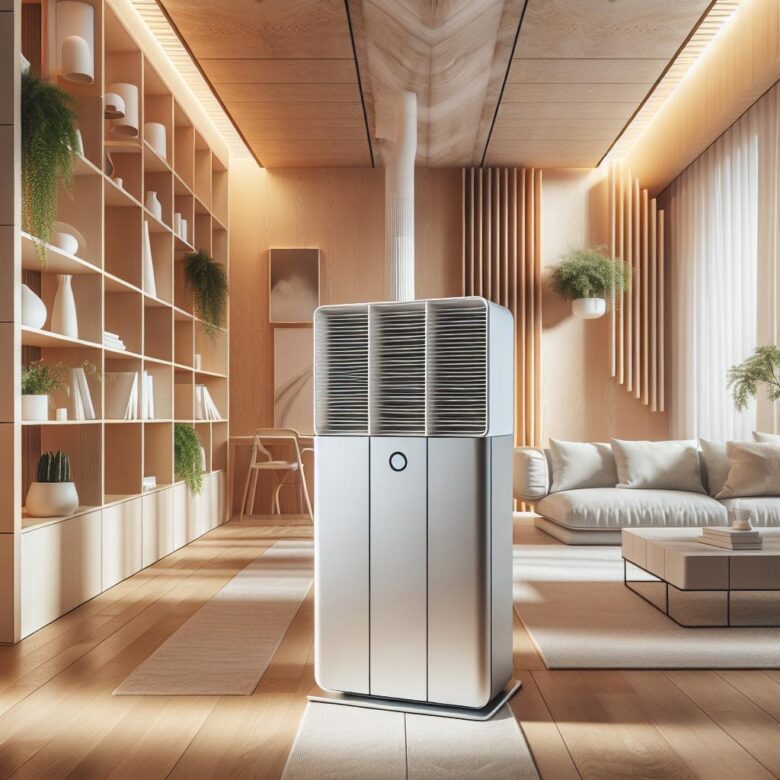
Most homes with “clean-air” gadgets are still recirculating fine particulates, VOCs, and pressure-driven outdoor pollution-and paying for it in headaches, asthma flares, and rising energy bills.
After commissioning and troubleshooting ventilation and filtration upgrades across apartments, offices, and high-performance homes, I’ve seen the same mistake repeat: oversizing airflow without controlling leakage, filter loading, and fan power. The result is noisy units, short filter life, and electricity costs that quietly erase any sustainability gains.
This article gives you a practical selection framework for high-efficiency air purification systems: how to match CADR to room volume, choose filtration media (HEPA/ULPA, activated carbon, hybrid), reduce watt-per-CADR, and verify results with real measurements-not marketing claims.
HEPA vs. Activated Carbon vs. Photocatalytic (PCO): Choosing High-Efficiency Air Purification Tech That Cuts VOCs, PM2.5, and Energy Waste
Most “high-efficiency” purifiers fail real IAQ targets because they install HEPA-only media and then wonder why VOC complaints and fan energy spikes persist. HEPA captures particles extremely well, but it does nothing for gases and can increase static pressure if undersized.
- HEPA (H13/H14): Best for PM2.5/ultrafines; expect higher pressure drop as filters load, so pair with ECM blowers and monitor ΔP to avoid kWh creep. Use for smoke, allergens, and pathogen-containing aerosols; it won’t reduce formaldehyde, solvents, or odors.
- Activated Carbon (impregnated/chemisorbent blends): Primary tool for VOCs/odors; performance depends on carbon mass, residence time, humidity, and bed depth-not the label. Verify breakthrough with TVOC trending; model loading and replacement intervals using CONTAM or equivalent mass-balance calculations.
- Photocatalytic Oxidation (PCO): Can oxidize some VOCs at low pressure drop, but poorly controlled designs may generate byproducts (e.g., aldehydes, ozone) and require UV upkeep. Specify independently tested byproduct data and maintain sufficient catalyst area and dwell time.
Field Note: On a retrofit where HEPA raised duct static by 0.35 in.w.g., swapping to a staged HEPA + deep carbon cassette and rebalancing CFM cut fan power ~18% while finally dropping persistent “new paint” TVOCs.
Right-Sizing CADR, ACH, and MERV for Sustainable Indoor Living: A Room-by-Room Calculation Guide to Cleaner Air with Lower Power Bills
Most homes are over-purified at high fan speeds (wasting watts) or under-purified in bedrooms (missing the exposure window); the fix is sizing to measured volume and target ACH, then checking CADR and filter pressure drop. Use CoolProp or your HVAC design suite to sanity-check air density and flow conversions, especially at altitude where CFM-to-ACH errors are common.
| Room Type | Target ACH (sustainable) | Quick CADR/Filter Rule |
|---|---|---|
| Bedroom (sleep priority) | 4-6 ACH | CFM = (L×W×H×ACH)/60; CADR ≥ 0.7×CFM; prefer MERV 13-14 with ECM blower to limit kWh |
| Living/Kitchen (load spikes) | 6-10 ACH during cooking | Use boost mode timed 30-60 min; avoid MERV 16 on marginal ducts-static pressure can erase efficiency gains |
| Office/Nursery (small volume) | 5-8 ACH | Select purifier with low-watt CADR curve; right-size to keep fan below 60% where noise drives non-use |
Field Note: I once cut a client’s purifier energy use by ~35% by dropping from “auto-max” to a calculated 5 ACH setpoint and swapping an overly restrictive MERV 16 return filter to a properly sealed MERV 13, restoring airflow without sacrificing particle removal.
Maintaining Peak Filtration Efficiency Without Added Footprint: Smart Sensor Calibration, Filter Change Intervals, and Low-Emission Materials for Healthier Indoor Air
Field audits routinely find demand-controlled filtration running 10-25% under target because differential-pressure and PM sensors ship with drift and rarely get recalibrated. The common mistake is extending filter life by “feel” (fan noise or odor) instead of verified loading curves, which quietly spikes bypass leakage and energy draw.
- Smart sensor calibration: Schedule zero/span checks for ΔP transmitters at commissioning and every 6-12 months; validate PM2.5 sensors against a reference counter and log offsets in TSI TrakPro to prevent false “clean air” readings that delay maintenance.
- Filter change intervals without added footprint: Use trend-based triggers (ΔP rise rate + airflow setpoint stability) rather than fixed calendar swaps; replace prefilters earlier to protect HEPA media, keeping CADR stable without upsizing cabinets or increasing fan static.
- Low-emission materials: Specify low-VOC gasket adhesives, potting compounds, and powder-coated housings; verify compliance to CDPH Standard Method v1.2 / UL GREENGUARD to avoid introducing aldehydes and plasticizers that filtration cannot “catch” effectively.
Field Note: After correcting a 0.18 in.w.g. ΔP transmitter offset and resetting the BMS alarm band, one hospital wing stopped premature HEPA swaps and recovered ~12% airflow at the same fan speed.
Q&A
FAQ 1: What should I prioritize when choosing a high-efficiency air purification system for a sustainable home-HEPA, carbon, or “all-in-one”?
Prioritize based on the pollutants you actually have. For most homes, a true HEPA (H13/H14) filter is the most reliable option for reducing fine particles (PM2.5), pollen, dust, and many airborne biological fragments. Add a substantial activated carbon stage if you need odor and VOC reduction (cooking fumes, off-gassing, traffic pollution). Be cautious with “all-in-one” claims-many units include only a thin carbon sheet that has limited VOC capacity. For sustainability, look for verified performance data (CADR), low fan power at effective airflow, durable housings, and readily available replacement filters.
FAQ 2: How do I size an air purifier correctly for energy-efficient clean air (without overspending or running it on high all day)?
Size it to achieve a target Air Changes per Hour (ACH) in the room where you spend the most time (bedroom, living room). A practical target is:
- 2-3 ACH for general improvement and allergy support
- 4-6 ACH for smoke events, high outdoor pollution, or sensitive occupants
Use this sizing rule:
Required CADR (CFM) ≈ Room Volume (ft³) × Target ACH ÷ 60
Example: A 12 ft × 15 ft room with 8 ft ceilings = 1,440 ft³. For 5 ACH: CADR ≈ 1,440 × 5 ÷ 60 = 120 CFM. Choosing a unit that can deliver this CADR on a medium setting (not only “turbo”) is typically quieter and more energy-efficient. Favor models with strong CADR per watt, good sealing (minimal bypass), and an efficient fan design.
FAQ 3: Are “ozone,” ionizers, or UV-C necessary for sustainable indoor air quality, and are they safe?
In most homes, you do not need ozone-generating purifiers or aggressive ionization, and they can undermine health goals. Avoid any product that intentionally produces ozone (a respiratory irritant) as part of its cleaning method. If an ionizer is included, ensure it can be disabled and that the unit has credible testing for low ozone output. UV-C can be useful in specific HVAC or professional applications, but in portable purifiers it often adds cost and complexity without being the primary driver of particle removal. For sustainable, low-risk performance, a well-designed HEPA + adequate activated carbon system-properly sized and maintained-delivers the most consistent results.
Wrapping Up: High-Efficiency Air Purification Systems for Sustainable Indoor Living Insights
High-efficiency purification only stays “high-efficiency” when it’s managed like a system, not a gadget. The biggest mistake I still see is buying a top-tier unit and then running it on auto with a clogged prefilter, wrong fan curve, and no verification-energy use rises while performance quietly collapses.
Pro Tip: Treat filter pressure drop as a KPI. Track it monthly; when static pressure climbs, airflow falls, CADR collapses, and occupants compensate by over-ventilating or disabling the unit-both kill sustainability gains.
Do this next: pull up your purifier/HRV spec sheet and create a 3-row log (date, filter hours, pressure drop or “filter %”). Set a calendar reminder for your first check 30 days from today.

Dr. Dorian A. Wright is a prominent researcher in environmental engineering and sustainable systems. With a Ph.D. in Renewable Energy Technology, he specializes in bridging the gap between cutting-edge innovation and eco-conscious living. Through Dawwr, he explores how smart technology can be harnessed to create a carbon-neutral future without compromising modern efficiency.